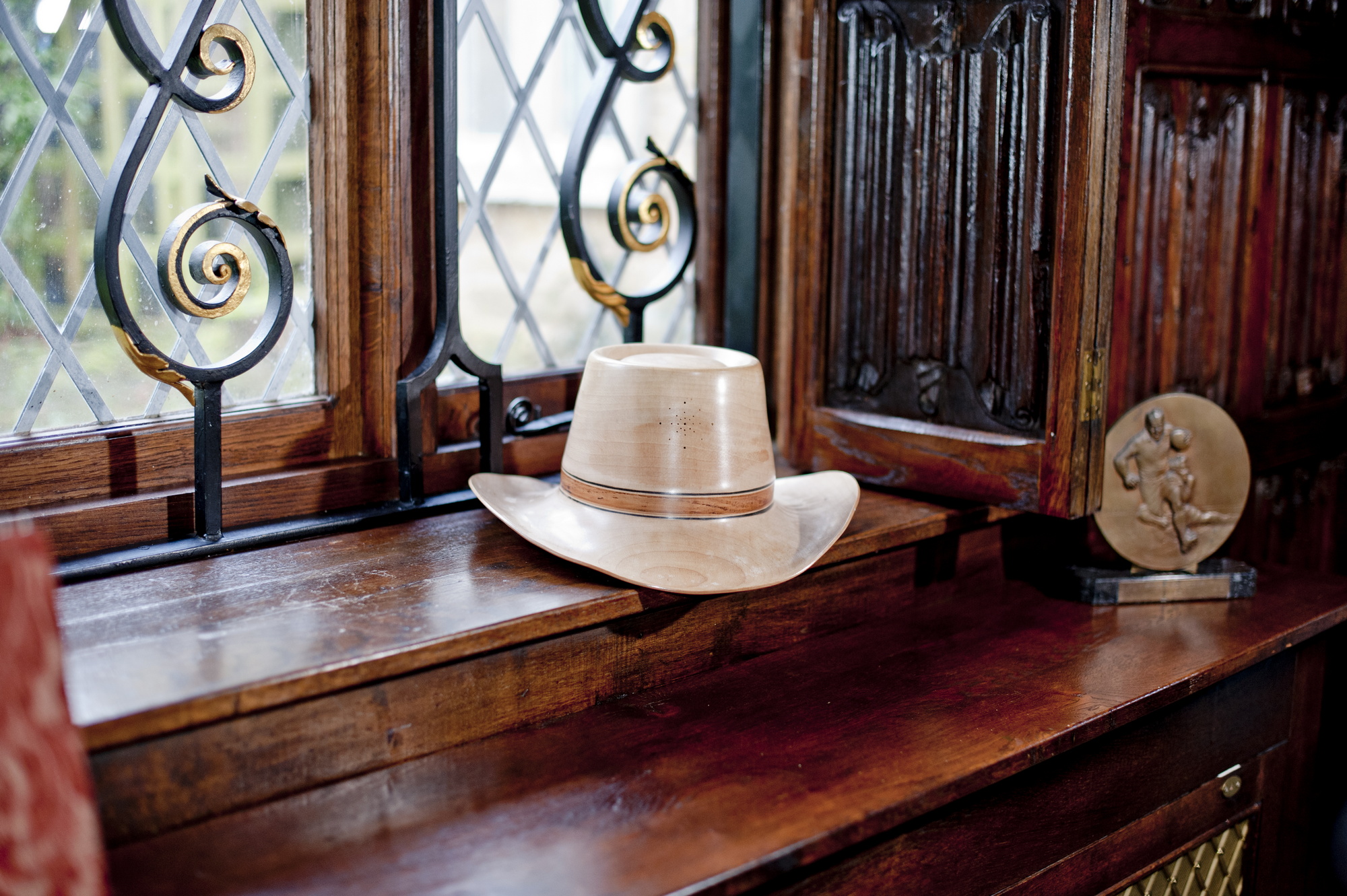
How Urns are Made
In Phil's own words.
All of my urns are hand made by me. The process I follow is one that I have built up over the years I have been turning, and it allows me to produce a top quality product reliably. Naturally everything starts with the tree: you can read more about my timber sourcing and selection. Once in the workshop the process is broadly as follows.
Final trimming and preparation
The sections of harvested wood are cut to slightly longer than the finished urn, to allow for the spigot I will create to hold the blank in the chuck. I use various diameter plywood discs to mark out the blanks, then cut them out.
Initial turning and hollowing
This next stage is what is termed "roughing out". Each blank is turned to the desired shape, then hollowed out using very specialised tools to remove the interior of each form, leaving a uniform wall thickness so that the piece can dry evenly. If the wall is too thick, the stress and tension created while it dries could be enough for the piece to split apart. If the wall is too thin, there won't be enough wood left to remove the out of roundness. Judging how thick to leave the walls comes from years of experience working with green wood.
Drying
When I've finished roughing out a piece it is weighed and dated to keep track of the drying process. I have built up a stock of 150-180 roughed out pieces. Normally freshly roughed pieces are ready to finish in 4-6 weeks, while others can take up to a year before they are ready to be taken back to the lathe.
Second turning
The dried pieces are taken back to the lathe to be re-turned, and any voids, cracks and splits from the drying process are dealt with.
Colour
Not in every case. The only reason I apply colour to wood is to enhance the natural beauty hidden in white or pale coloured woods.
Fitting the lid
The lids and corresponding inserts are custom made for each individual urn. They are usually made from a very dense hardwood such as African Blackwood, English Boxwood or Holly, but it's not essential. Boxwood and Holly are my favourites to work with, as they cut beautifully. What is important for me is that the lids blend with the overall form, complementing it rather than appearing to be an afterthought. They all have a hand-cut 12tpi thread, which ensures a secure closure.
Finish
The quality of the finish on my pieces is very important to me. I use two types of eco friendly finish, either a waterborne lacquer or a hardwax oil, both industrial grade finishes which need no maintenance other than the occasional dusting.
In addition I offer a number of customisation options, which are fitted into the process as needed. To ask about them, please get in touch at Handmade Urns.